

UK consumers save on average £215 annually by using price comparison websites for insurance, a figure that reflects the growing importance of these platforms in managing household budgets. As essential service costs continue to climb across the UK, price comparison sites have become indispensable tools for finding better deals on insurance, utilities, and broadband. This article explains how these platforms work, the benefits they deliver, and the practical steps you can take to maximize savings while avoiding common pitfalls.
Table of Contents
Key Takeaways
| Point | Details |
|---|---|
| Average Annual Savings | UK consumers save £215 yearly on insurance through comparison sites. |
| Regulatory Oversight | FCA standards and GDPR compliance ensure data accuracy and consumer protection. |
| Coverage Limitations | Not all sites include every provider or update data at the same frequency. |
| Trusted Solutions | Wise Choice Comparisons offers transparent, GDPR-compliant comparisons for UK households. |
Introduction to Price Comparison Sites
Price comparison sites consolidate offers from multiple insurance, utility, and broadband providers into a single platform, eliminating the need to visit dozens of individual websites. These tools serve as digital marketplaces where UK consumers can view side-by-side quotes, coverage details, and pricing structures in minutes rather than hours. For households managing tight budgets, this simplification translates directly into better financial decisions and measurable cost reductions.
The functionality extends beyond just displaying prices. Modern comparison platforms filter results based on your specific requirements, such as coverage levels for home insurance, contract lengths for broadband packages, or energy tariff types. This personalized approach ensures you’re comparing like-for-like options rather than wading through irrelevant deals that don’t match your needs.
Rising costs across essential services have made these platforms more critical than ever. Energy bills, broadband subscriptions, and insurance premiums have all experienced significant increases in recent years, putting pressure on household finances. By aggregating current market rates and highlighting competitive offers, price comparison basics empower you to identify opportunities for immediate savings without requiring financial expertise.
Key features of effective comparison sites include:
- Real-time data feeds from regulated UK providers
- Transparent fee disclosures with no hidden charges to users
- Filtering tools to match your specific coverage and budget needs
- Secure data handling compliant with UK privacy regulations
- Clear presentation of policy terms and exclusions
Understanding how these platforms operate helps you leverage their full potential. The Wise Choice Comparisons services demonstrate how a well-designed platform can simplify complex purchasing decisions while maintaining complete transparency about provider relationships and data usage.
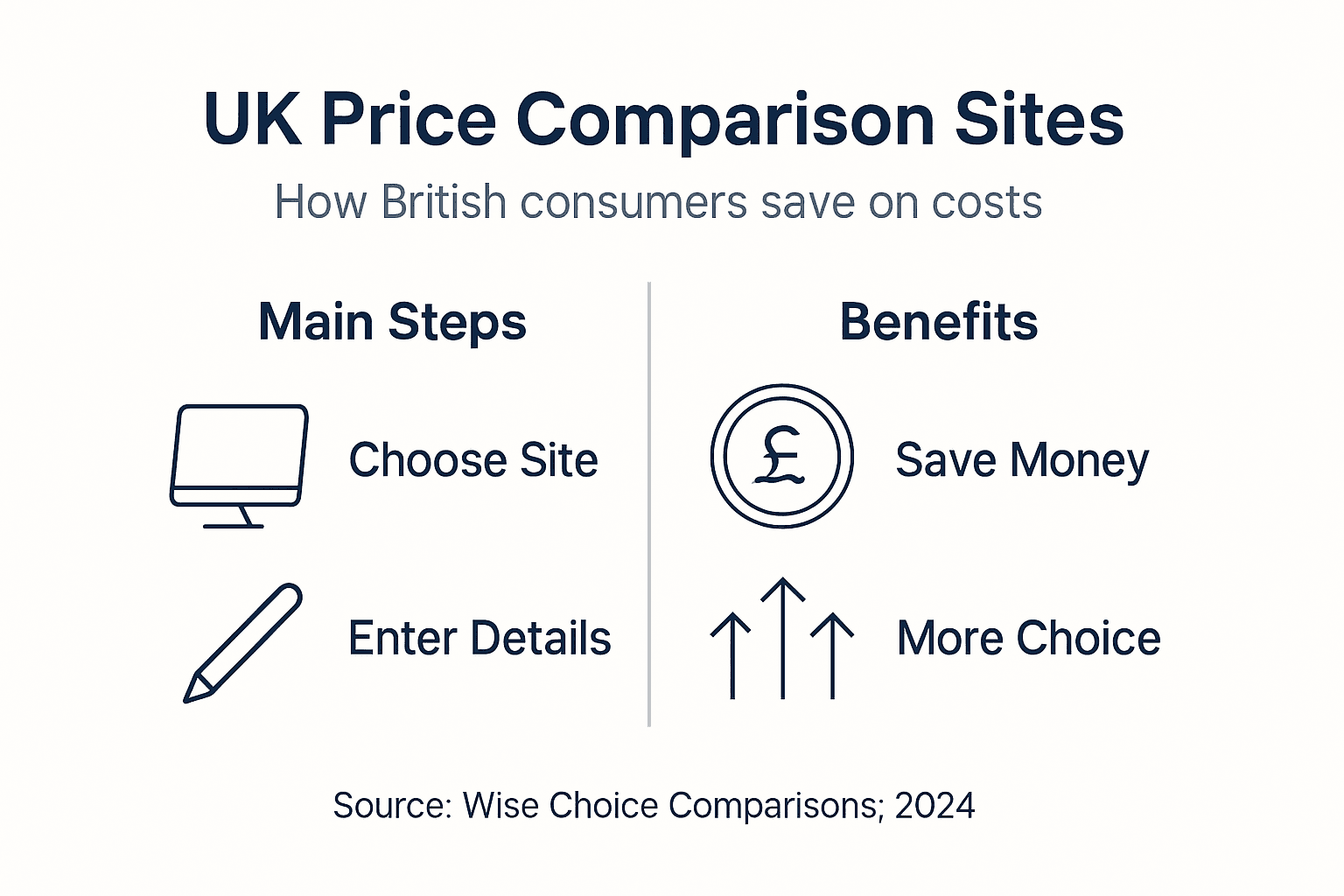
How Price Comparison Sites Work in the UK Market
Price comparison platforms operate through direct data feeds from insurance companies, utility providers, and broadband suppliers, with most sites refreshing information daily to ensure accuracy. These feeds contain pricing structures, coverage details, policy terms, and eligibility criteria that algorithms then process to generate personalized recommendations. The ranking systems consider multiple factors beyond just price, including coverage scope, excess amounts, customer service ratings, and policy features.

Regulatory oversight plays a crucial role in maintaining fairness and accuracy across the comparison landscape. The Financial Conduct Authority (FCA) sets standards for how sites must disclose provider relationships, commission structures, and data update frequencies. This framework prevents misleading presentations and ensures consumers receive reliable information when making purchasing decisions.
GDPR compliance protects your personal information throughout the comparison process. Sites must encrypt data transmissions, limit information sharing to necessary parties, and provide clear consent mechanisms before collecting any details. These protections mean you can enter your postcode, coverage needs, and contact information without risking unauthorized use or third-party sales of your data.
The typical data update cycle varies by site and service category:
| Service Type | Update Frequency | Provider Coverage | Data Verification |
|---|---|---|---|
| Car Insurance | Daily | 80-95% of market | Automated + manual spot checks |
| Home Insurance | Daily | 75-90% of market | Automated + quarterly audits |
| Broadband | 24-48 hours | 70-85% of market | Provider confirmation required |
| Energy | Real-time to 48 hours | 60-80% of market | Ofgem data validation |
Pro Tip: Before committing to any deal, check the site’s